
Don't Worry - Be Now
Updated: Dec 22, 2025
A normal day, a normal mind
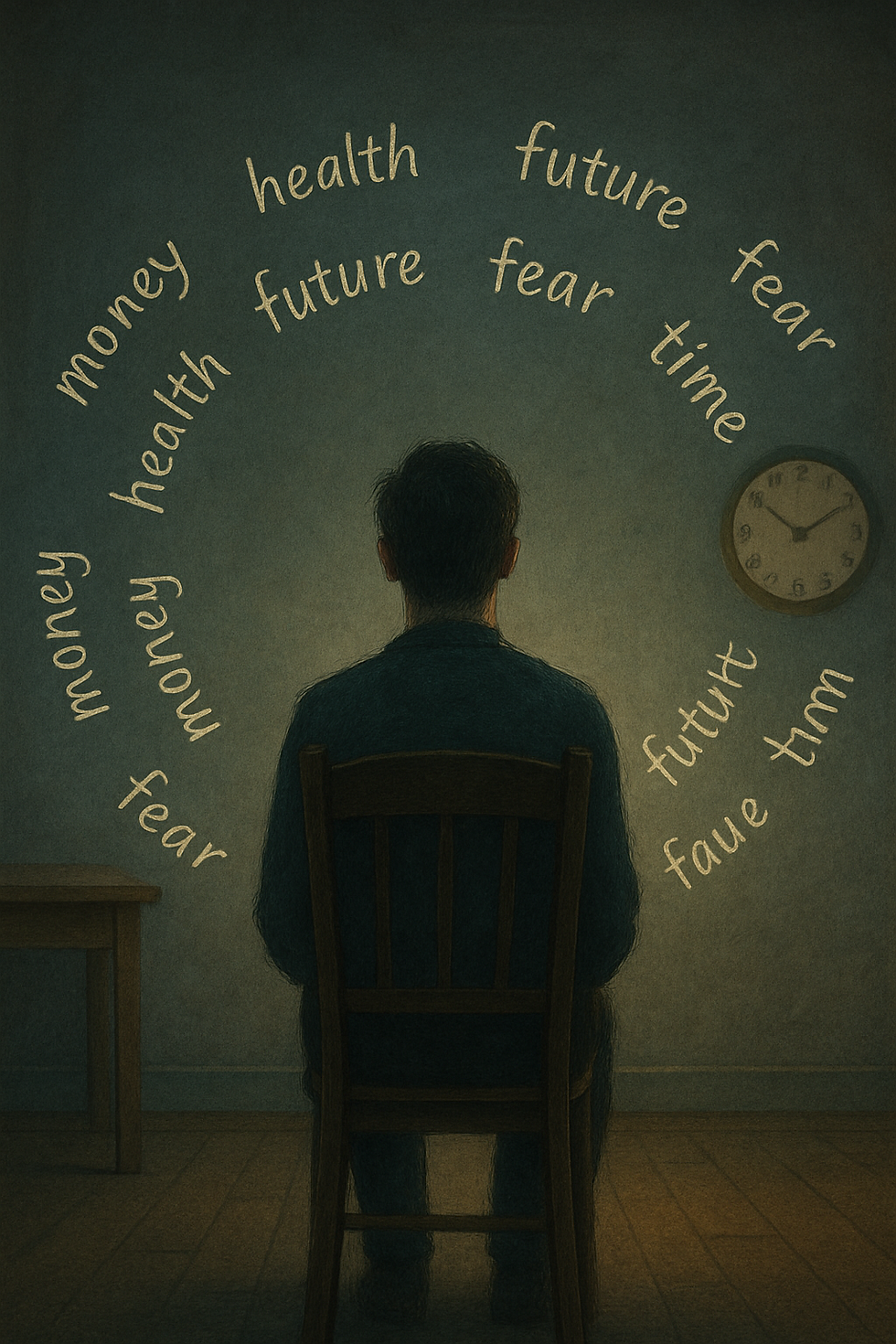
It was a quiet night. The house had settled into silence. The fan was running on the lowest speed. A phone lay face down on the table.
I was not doing anything important. And yet, my mind was busy.
Thoughts were moving in a familiar pattern. Health. Time. Future. People. The same concerns I have carried for years.
Nothing dramatic was happening. Life was fine. And still, the mind kept working.
I noticed something strange. The worry felt responsible. Almost intelligent. As if worrying meant I was being careful about life.
But when I slowed down and watched closely,I saw the loop.
The worry I had that nightwas almost the same worry I had yesterday.And last month.And years ago.
Different details.Same theme.
At that moment, mind flow broke. Not because of a problem outside, but because worry had quietly taken the driver’s seat inside.
I sat there for a while, doing nothing. Just watching the mind repeat itself.
That was when it became clear. Life was moving forward. Worry was staying in the same place.
I opened my notes app and typed one line:
Don’t Worry, Be Now
That line is the reason you are reading this.
The universal truth: everyone worries
Worry is one of the most shared human experiences.
It does not need invitation. It shows up quietly and makes itself comfortable.
Money.
Health.
Children.
Parents.
Marriage.
Reputation.
Future.
Different lives, same list.
You may be earning more than before, yet the worry shifts to expenses.
You may be healthy today, yet the mind jumps to symptoms.
Children grow up, worries grow with them. Problems change shape. Worry keeps its tone.
This is the strange part.
Most worries do not disappear with time. They repeat.
The dates change. The details change. The worry stays.
This pattern has been observed across cultures and ages. Psychology describes this as repetitive thinking. The mind returns to familiar concerns because familiarity feels safer than uncertainty.
That is why worry feels personal. And that is why worry is universal.
The repeat test: “Same worry, same you”
Let us slow this down.
Take a piece of paper.
Write one sentence.
“What am I worrying about today?”
Now pause.
Think back one month.
Write what you worried about then.
Now go further.
Think about one year ago. Or five years ago.
Write that too.
Most people see the pattern immediately.
Different situations. Same themes.
The mind revisits the same concerns again and again. Research on worry and rumination shows this looping nature clearly. Studies describe worry as a habit of thought rather than a response to new danger.
That explains why worry feels busy. It is active. It is repetitive. It feels like work.
And yet, nothing new gets produced.
One psychologist described worry as“ a rocking chair — it gives movement, not progress.”
The honest question: what difference did it make?
Now comes the uncomfortable question.
What did all this worrying change?
Did it pay the bill?
Did it prevent the outcome?
Did it solve the problem?
For most people, the honest answer is silence.
I once met a father who worried deeply about his child’s future. Every exam season brought tension. Every decision brought fear. Years passed in constant mental noise.
The child grew up anyway. Faced challenges anyway. Found direction anyway.
What changed was the atmosphere at home. More anxiety. Less presence. Fewer relaxed conversations.
The outcome remained uncertain. The cost was very real.
Clinical psychology makes a clear distinction here. Planning leads to action. Worry stays in the head.
Studies on worry show that people who worry excessively do not solve more problems. They experience more stress, poorer sleep, and higher emotional exhaustion over time.
One researcher summed it up simply: “Worry predicts suffering better than it predicts solutions.”
Worry consumes attention. Planning creates movement.
This difference matters more than we realise.

Worry lives in the body
Worry looks like a mental activity. It runs quietly inside the head.
The body experiences it very differently.
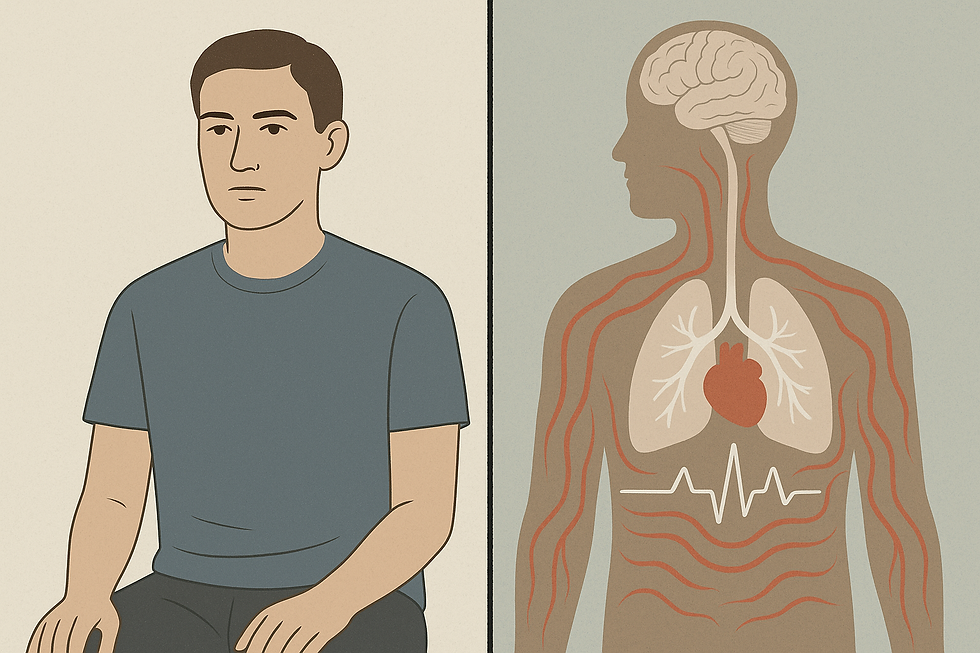
When worry appears, the brain reads it as danger.
The stress system activates.
Heart rate adjusts .
Breathing shifts.
Hormones enter the bloodstream.
One of them is cortisol.
Cortisol plays an important role in survival. It supports quick
response.
Movement. Protection. Action.
Worry keeps pressing the same internal switch.
Again. Again. Again.
The situation stays ordinary. The body stays alert.
Research on repetitive negative thinking shows a consistent pattern. People who worry repeatedly carry a higher stress load across the day. Their cortisol levels take longer to settle. Sleep becomes fragmented. The nervous system remains on standby even after the thought fades.
The body responds first. The mind explains later.
This makes the process easier to understand.
Your body reacts to imagined danger with the same seriousness as real danger.
An unpaid bill and a wild animal can activate similar chemistry. The body prepares for survival. It waits for movement.
When movement does not follow, the chemistry remains.
That is how worry gradually takes a physical form.
Why long-term worry becomes expensive
Worry rarely causes harm in a sudden way. Its effect builds quietly.
Stress reshapes daily behaviour before it leaves medical traces.
Sleep grows lighter. Food choices turn impulsive. Movement reduces. Patience shortens.
Tiny decisions begin to change direction.
Over time, the pattern settles.
Large population studies link anxiety-related states with increased cardiovascular risk.
Long-standing stress connects with inflammation, blood pressure changes, metabolic strain, and slower recovery.
Clinicians recognise this story well. Symptoms arrive at the clinic. The roots stretch back across years of tension.
This does not predict illness with certainty. Human bodies recover remarkably well.
This is a risk story, not a guarantee story.
Risk accumulates when the same stress loop runs daily. Health settles the account later for what the mind rehearses repeatedly today.
Why worry feels useful even when it repeats
A question naturally follows.
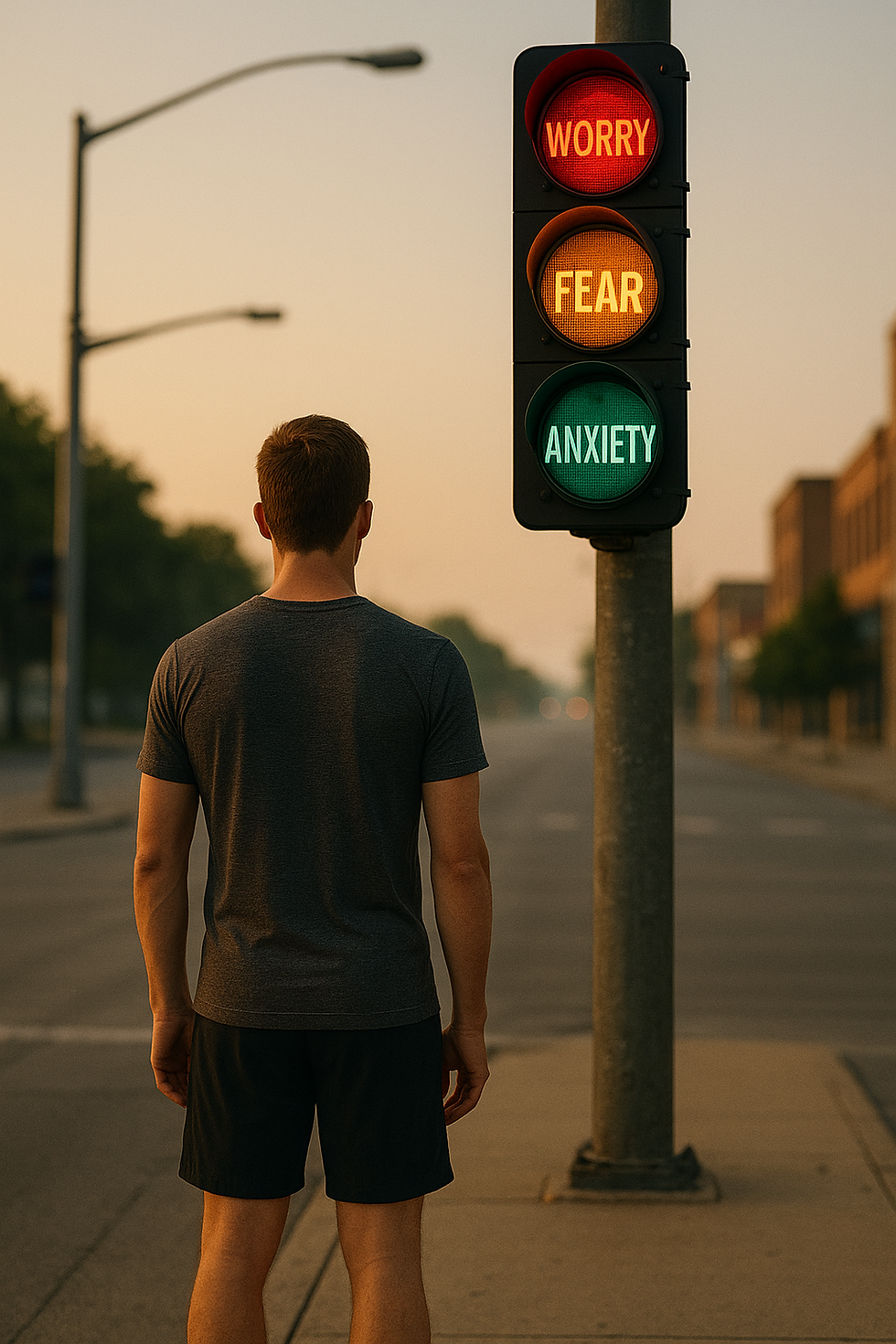
Why does the mind return to worry so often?
Because worry offers comfort in subtle ways.
The first comfort comes from preparation.
Worry creates the feeling of readiness.
The mind feels occupied. Serious. Engaged.
Real preparation requires steps. Worry remains at the level of thought.
The second comfort comes from control.
Revisiting a problem creates involvement. The mind stays active. Control feels close. The situation stays the same.
The third comfort comes from delay.
Worry postpones direct contact with fear. Action carries uncertainty.
Worry keeps fear at a distance. Clinical psychology explains this pattern clearly.
Worry sustains anxiety by avoiding emotional exposure.
Fear reduces through repeated contact. Worry circles fear and keeps it intact.
A simple story makes this visible. A man carried fear around speaking in meetings.
Each night he replayed conversations. Imagined outcomes.
Anticipated reactions. Years passed. The fear remained.
Later, he chose to speak once each week. The fear softened within weeks.
Worry had protected the fear. Action reduced its strength.
Books on anxiety describe the same principle in different words. Fear loses power through contact. Distance allows it to grow.
The mind chooses worry because it feels safe. Growth begins when action replaces rehearsal.
The Mind Flow principle in one line
Thoughts appear on their own.
They arrive without permission.
They leave without notice.
Worry thoughts follow the same rule. They show up automatically. They repeat automatically.
A thought appearing does not carry authority. It carries information at best. Noise at worst.
Mind Flow begins the moment this is understood.
A thought can knock on the door. That does not make it the owner of the house.
Once this becomes clear, something shifts quietly. The mind stops fighting thoughts. The body relaxes. Attention returns to the present.
This single insight changes the relationship with worry.
The clear answer: who are you?
Identity never comes from thinking.
Identity forms through repetition.
You are what you do. Repeatedly. Consciously.
Worry repeated becomes a habit of fear. Action repeated becomes a habit of strength.
The mind learns from behaviour more than intention. What you practice daily shapes who you become.
A person who walks daily becomes someone who moves. A person who learns daily becomes someone who grows.
A person who avoids daily becomes someone who fears.
Conscious repetition creates mind flow. Life begins to move with less friction.
This is simple. And this is powerful.
The method: schedule worry like a meeting
Worry loses power when it is contained.
One effective way to do this comes from clinical psychology and behavioural science.
It is often called Worry Time.
The idea is practical.
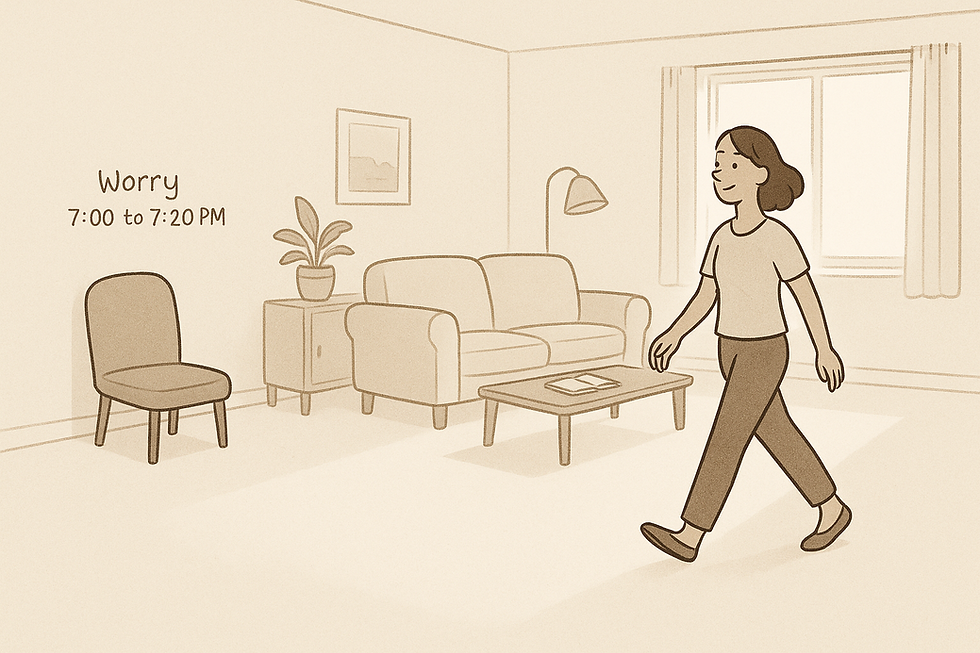
Choose one fixed slot every day. Fifteen to twenty minutes works well.
This becomes the official time for worry.
When worry appears outside this window, you delay it. You tell yourself: “This will be handled at the scheduled time.”
At first, this feels strange. Soon, the mind learns the boundary.
Inside the worry slot, structure replaces chaos.
Write the worry clearly. Clarify what part is under your influence.
Choose one small action.
A call. A message. A task. An appointment. A decision.
Then stop.
This approach has been studied in therapeutic settings for chronic worry and anxiety.
Trials and reviews show that postponing worry reduces its frequency and intensity over time.
The mind learns that worry has limits. Action begins to replace rehearsal.
A simple real-life example shows this clearly.
A woman worried constantly about her health. Symptoms came and went. Thoughts stayed all day.
She shifted worry into one evening slot. Doctor visits happened inside that time. Lifestyle changes followed.
Within weeks, worry reduced. Energy returned. Sleep improved.
Books on anxiety management repeat this lesson in different language.
Attention shapes behaviour. Structure reduces mental noise.
One line captures the essence well:
“Give worry a chair, not the whole house.”
When worry gets a fixed place, life finds space again.
Turning worry into action
Worry becomes useful only when it leads somewhere.
A simple structure helps with this.
Step one Write the worry in one clear sentence. No explanations. No background story. Just the core worry.
Step two Look at the sentence and circle what falls under today’s control. One small part is always controllable.
Step three Choose one next action. A phone call. An email. A twenty-minute task.
A doctor appointment. A budget check. A conversation.
Then stop.
This changes the relationship with fear. Worry stays on paper. Action enters the day.
One action daily becomes exposure. Fear reduces when it is met regularly.
How this looks in real life
Money
A man worried constantly about money. The worry stayed vague. Heavy. Endless.
He began tracking expenses once a week. One hour. Same day. Same notebook.
Within weeks, clarity replaced noise. Decisions improved. Sleep followed.
Steal this: one weekly money check beats daily financial worry.
Health
A woman carried silent fear about her health. Every sensation triggered imagination. Internet searches increased anxiety.
She fixed one medical checkup.
Built a simple sleep routine.
Walked daily.
Symptoms softened. Fear lost intensity.
Steal this: clarity grows when health meets routine.
Relationships
A couple avoided difficult conversations. Worry filled the space instead.
They chose one honest talk each week.
No phones.
No distractions.
Understanding improved.
Tension reduced.
Steal this: one honest conversation a week dissolves months of silent worry.
Books and research that shaped this thinking
Worry has been studied deeply.
Thomas Borkovec’s work describes worry as a mental process that maintains anxiety through repetition and avoidance. His research forms the backbone of modern worry-management approaches.
Clinical models of pathological worry explain how repetitive thinking sustains fear through lack of emotional exposure. These models guide evidence-based anxiety treatments used worldwide.
Practical clinical handouts on worry postponement show how structure reduces mental noise and restores control through action.
Three lines worth remembering:
“Worry is a habit of thought, not a solution.” — Borkovec“ Anxiety feeds on avoidance.” “Action is the shortest path back to calm.”
Don’t worry. Be now.
Worry will come tomorrow. That part is certain.
What remains in your control is timing. And response.
You choose when to meet worry. You choose what action follows.
A calm life forms through repeated conscious action. Day after day. Step after step.
Here is a simple challenge.
For the next seven days, worry only during your worry time. Outside that window, take one next action.
Meet fear daily. Keep it small. Keep it real.
Don’t worry. Be now. Then do the next right thing.
Comments